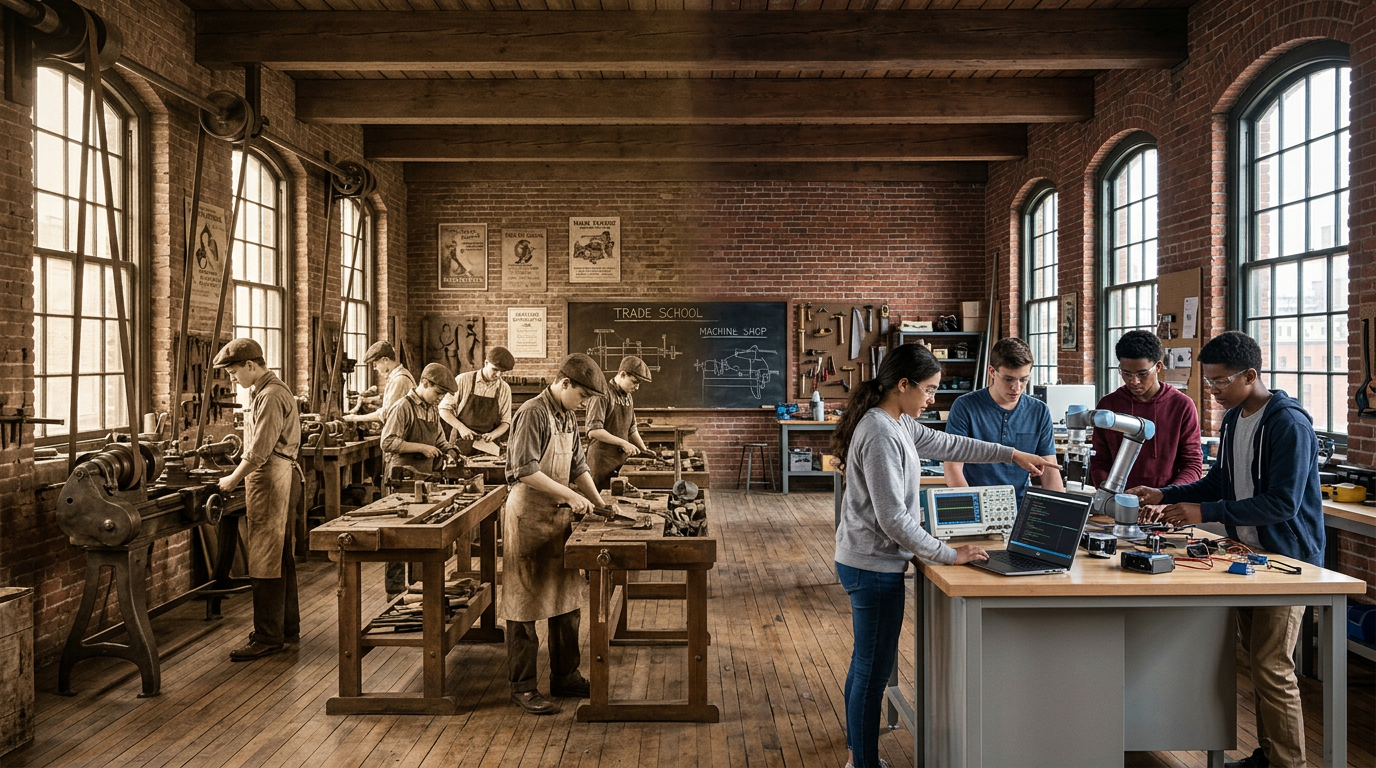
A wall was built in 1917.
Eighty-seven percent of parents of teenagers said skilled careers deserve the same respect as any other path. Only 12 percent said they would like their own teenager to choose trade school.
Parents respect the work. They just don’t picture their own kid doing it.
That isn’t an accident. It’s the legacy of a design.
In 1917, the Smith-Hughes Act created the first federal money for vocational education and built the trades a world apart: their own classrooms, their own teachers, their own funding. Two tracks. One was called thinking. The other was called work. The words are softer now — “college material,” “good with their hands.” The sorting isn’t.
The country was warned. Two years earlier, John Dewey, the era’s leading philosopher of education, argued that splitting the schools this way amounted to “a plan of social predestination totally foreign to the spirit of a democracy.”
He lost.
After the Second World War, college stopped being a good path and became the only one that counted, and the trades were recast as the thing you settle for.
The wall is more than a hundred years old, and the economy that built it is gone. This economy needs every kid to know the science, and to have made something real with their hands long before they choose a career.
Hands-on CTE is where both still happen.