CTE is applied science. It demands what this generation stopped doing. Here is how we prove it.
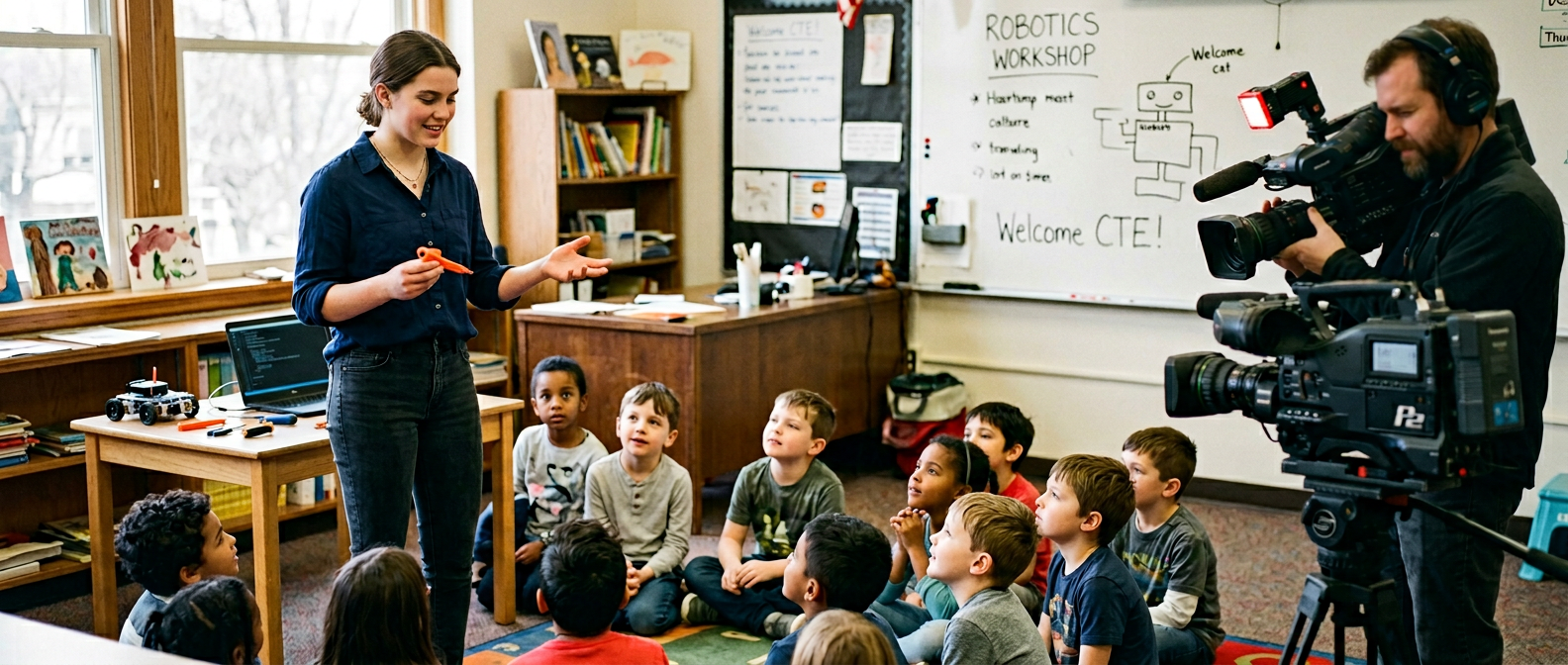
The CTE Science Teach-In: the mission, in a classroom.
A high school CTE student walks into a fourth-grade classroom and teaches a lesson from her own coursework — a circuit, a joint, a reaction — with materials the kids can pick up, try, and get wrong.

Science Mapping: why the demands are science.
When a CTE student gets something wrong, it isn't a teacher's opinion. The weld cracked. The circuit overheated. Physics graded the work.
The Project is commissioning the research that documents that physics — occupation by occupation, with a university partner, starting with the occupations in shortest supply. What science does a working electrician actually run? A machinist, a process technician, a welder? The answer is what makes a plumb wall a result and not a grade.
The electrician sizing conductors for a data-center run is working ampacity, voltage drop across distance, and derating for heat and conduit fill. The machinist holding two thousandths of an inch is managing thermal growth, tool deflection, and how the material moves under the cut. The welder is managing heat input, metallurgy, and how the joint will move as it cools. The process technician is reading a live unit through its instrumentation and catching the deviation before it becomes an incident. None of this is science adjacent. It is science.
The research publishes free, organized by career pathway, so a teacher or a counselor can pull the science behind any program they offer.
Manufacturing, construction, energy, aviation, and every other industry that runs on skilled work recruit from the same pool of young people, which makes them competitors.
Founding Circle convenings: the industries, in one room.
What brings them to one table is that the pool is the problem, and it's a problem about a generation, not about any one industry's openings.
Twice a year, the Project convenes the decision-makers of its Founding Circle associations, with the employers and workforce investors who back them. These are not conferences. They are working sessions with an agenda that fits on a page: which occupations get mapped next, where the Teach-In goes, what the coalition says and who says it.
How the findings travel.
Research nobody reads changes nothing.
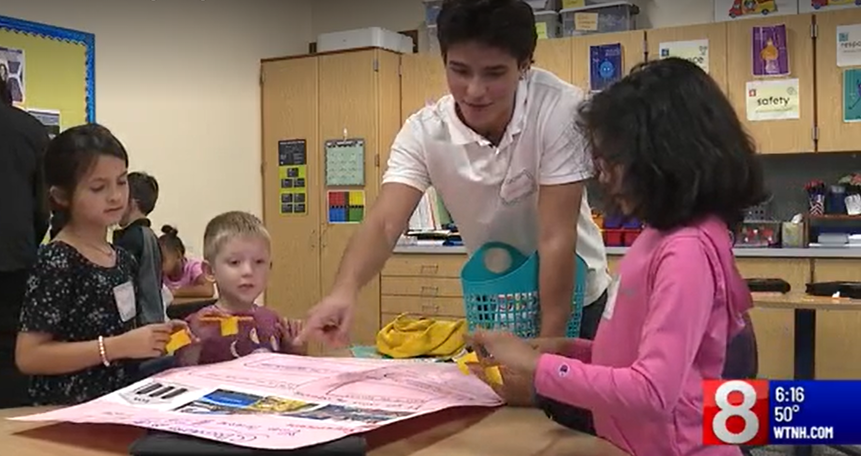
He has to show up, at a place, on a day. He has to know which part of what he learned applies to this room. He has to finish. In about an hour, younger students work through a real problem alongside someone barely older than they are, and go home with materials that put the conversation in front of a parent..
What a parent sees is a teenager doing every one of the things she has stopped expecting from her own child.
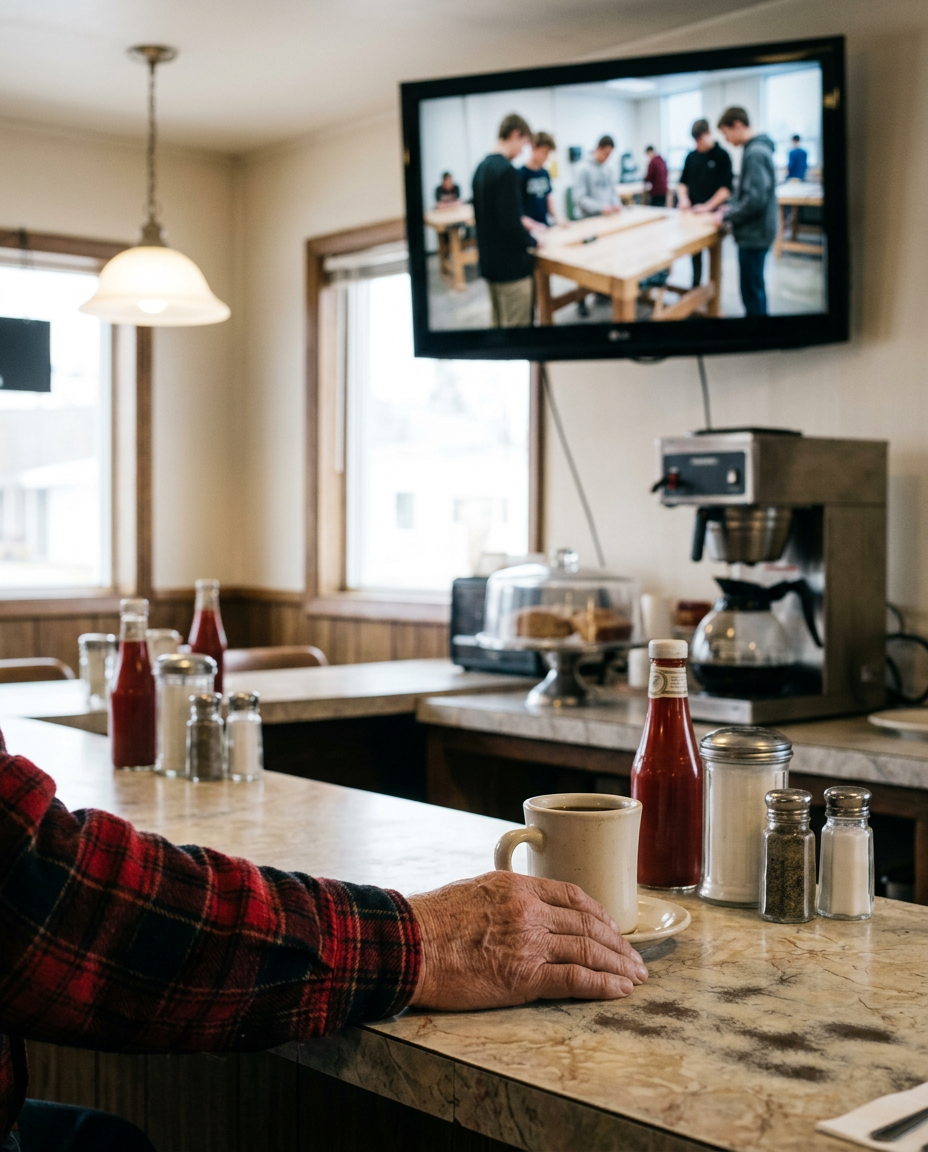
The Teach-In has run in dozens of markets across the country. Local television covers it in six of every ten markets, campaign after campaign — in major metros and in rural communities national campaigns rarely reach. That coverage is not a bonus. Local news still reaches working families more reliably than any national campaign, and it is the only proof a message landed somewhere specific. National observances build awareness. The Teach-In builds the evidence, market by market.
Each Teach-In leaves a record: certificates for the CTE students who taught, host teachers reporting whether they'll bring applied science into future lessons, materials for the parent, and the media coverage itself.
Every science map becomes material built to move: visuals tailored to each industry, op-eds and commentary placed with the outlets that shape how the country talks about work and school, and the lesson materials the Teach-In carries into classrooms and homes.
Each Founding Circle association gets the science inside its own occupations, framed for its own members and the communities they work in — and carries the larger story with it: what this education demands, and what it gives back. Associations already reach members, students, teachers, and local press year-round. The Project gives those channels something new to say.